The last two springs have been incredible when we consider the number of plants that our own farm grew to ship to our store, basically every day from mid-April thru mid-June. Deciding what to grow, and how much, is our biggest challenge as we sit down to review last spring and plan for 2023.
John and his crew at our growing location in Hydes, MD, start to plant pansies in late January. By late February into March, all 12 of our greenhouses will be open to growing the many plants we'll need to have for our customers. We will begin to ship plants to Valley View Farms in early March.
 |
| A few of the tomatoes grown at our Valley View Farms greenhouses |
Our vegetables are all planted from seed. John and his team will grow over 28,000 tomato plants alone! Our variety list changes slightly from year to year. To find new varieties, we'll scour seed catalogs, check in with local farmers' markets to see what is trending, read articles on new introductions, and ask and listen to our vegetable gardening public. We've found that All-America Seed Selections (AAS) are a wonderful resource too, as they have trial gardens nationwide to see which varieties perform the best.
 |
| The AAS tag means it has performed well in gardens |
Adjustments are made accordingly. Last year, we grew over 70 varieties of tomatoes. Our customers wanted more small-fruited types, so we will add some for next year. We go through the same process for choosing pepper, squash, eggplant, lettuce, and other vegetable varieties.
The flowering plants we grow come into John's greenhouses as young plants, which his team will transplant from plug flats containing a hundred or more plants into the pots that we will sell in our store. Choosing those varieties is similar to how we decide on vegetables, but we have a few other ways to see new plants. In mid-spring, trials for plants are held in California. Newsletters from our trade industry highlight the best of the plants. This is usually our first peek into new varieties. We will then attend Cultivate, a huge show for horticulture every summer held in Columbus, Ohio. There, breeders show off the best of the new plant cultivars.
 |
| Salvias are favorites of pollinators |
 |
| Rudbeckia in so many sizes |
 |
| Our customers love begonias |
We attend trade educational seminars, like those offered at our Maryland Nursery Landscape and Greenhouse Association's Chesapeake Green and Greenhouse Field Day conferences. Plant breeders and sellers send glossy catalogs and tempt buyers with magazine articles in trade magazines, and emails. We are lucky to also have a large regional plant trial hosted by Penn State in the Lancaster area. We will walk those grounds to see what improvements may have been made to some of our old favorites.
 |
| Celosia is a fantastic late summer and fall flower |
 |
| So many shades of Rudbeckia! |
 |
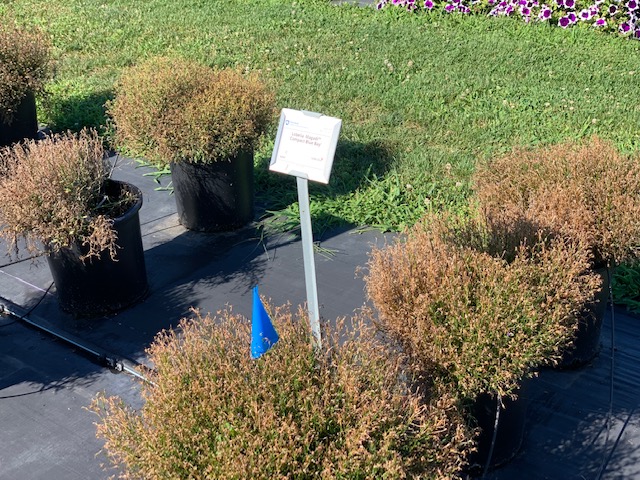
| The good, the bad, and the ugly are all represented. Lobelia is not the best of the summer crops |
 |
| On the other hand, Scaevola loves the heat |
As we meet to discuss all the information gathered, we look at the larger picture of what gardeners are asking for in their plantings. They want to attract pollinators, have flowers that can be cut and arranged in vases, heirloom vegetables, annuals that bloom all summer, and perennials that reliably come back for years. We find what's new isn't always better and see the resurgence of old varieties with improvements.
We hope we get it right and that our community is happy with our offerings. Please tell us what you're looking for in your garden next year. Let us know what did spectacularly and what plants didn't live up to expectations.
We love what we do and strive to provide the most beautiful, healthiest plants for Maryland gardens.