Saturday, October 22, 2011

Planting Bulbs for Spring Color


Planting bulbs identifies a gardener as a true optimist. Who else would plant brown orbs of varying sizes hoping for brilliant Spring color?

The cooler night time temperatures and frosty fall mornings mean it is time to plant. Valley View Farms still has a complete selection of bulbs including daffodils, tulips, iris, hyacinths, alliums and much, much more.

Many of the bulbs are deer resistant, in fact, all animals leave the toxic bulbs of the daffodils alone. Others would benefit from an application of Bobbex when they are planted to keep pesky chipmunks and squirrels away.
Choose an area that receives six hours of sun or more for optimum results. Plant in a well drained area as most bulbs don't like "wet feet".  Add compost to the bed as you plant, but don't worry about adding a fertilizer right now. The best time to feed will be in the spring as the flowers fade.
In general, larger bulbs like tulip and daffodils should be placed 6-8 inches deep. Smaller, minor bulbs like crocus are fine planted just 3-4 inched deep.  Planting them deeper may prevent some varmints from getting to them and allows for adding winter-hardy pansies over the planting bed.
Choose tools that are comfortable for planting. Bulb planters are great for planting individual bulbs. Look for an auger for the household drill to speed things up a bit. Because I plant my bulbs in clumps of 6-12 bulbs, I generally use my garden shovel for most planting tasks. Plant pointy side up, but don't worry if your not sure which end is up; the bulb will grow towards light regardless.
There are many good websites with wonderful ideas for planting. Click here to view the new website from the folks in the Netherlands called Dig, Drop, Done. They have some videos and a gallery for some added inspiration.
Planting bulbs is easy. Add them to your garden now and you'll be enjoying spring flowers for years to come.


Thursday, October 6, 2011

Pumpkin Art

We have some talented people working at Valley View Farms. One of our long-time employees, Carey Wilkerson, is especially artistic.

She personalizes Christmas ornaments in November and December, and creates hand-painted signs for all of our departments. This time of year, Carey also decorates pumpkins. Here are four of them that we presented to local television stations.


The ballerina pumpkin is painted pink. An added tutu and a tiara make this extreme makeover complete!


Talk about about a whopper of a hamburger;the burger and fixin's are made of felt. The lettuce is tissue paper. I love the sesame seeds made from pumpkin seeds.                                                              .


This scary pumpkin is painted black. Those eyes sure are creepy, but scarier yet are the roots. They are made from that spray foam found in the hardware store. Creepy!


My favorite decorated pumpkin is the puppy. Faux fur was used to create the adorable paws, tail and floppy ears. The puppy's muzzle is some type of clay. She is adorable!

Thanks, Carey, for sharing your creativity with us. Now when I pick out my pumpkins, it won't necessarily be for carving.

Friday, September 16, 2011

Fall To-Do list

 Calling all gardeners! Now is the BEST time for several tasks and projects for the home landscape. We've received plenty of rain late this summer. The soil temperatures remain warm even as the air cools. The timing is perfect for transplanting trees, shrubs, perennials and grass seed. And, if you're like a lot of us, most of the planting around the house was completed in spring, providing beautiful blooms and color in April and May but leaving the landscape a little bland right now.
 Here, in no particular order, is a fall to-do list.


  • Plant pansies, mums and ornamental cabbage and kale for autumn color in pots and the garden.  

  • Renovate the lawn; check our website for some seeding and fertilizing tips.
  • Plant spring-flowering bulbs like tulips, daffodils and other colorful flowers.

  • Plant perennials, trees and shrubs. They get a chance to be well rooted in time for spring. Look for plants with colorful leaves, late season flowers and attractive bark. Consider trees and shrubs with berries, like pyracantha, hawthorn, beauty berry and various hollies. They are beautiful and the birds love them.  

  • Protect houseplants and tropical plants. Be prepared to bring them in before the first frost. Check leaves and stems for insects; spray with horticultural oil or insecticidal soap before moving plants inside. Repot  plants in the spring if necessary. 

  • Dig up summer bulbs like dahlias, cannas and caladiums. Store them in a frost free area and replant in spring.
  • Visit our water gardening department for information and a handout on how to overwinter your pond. Better yet, attend Tim's seminar on October 8th at 9 o'clock for tips from the expert.
  • Tidy up. Recent storms have left branches and leaves in the lawn and garden
  • Edge perennial beds.
  • Remove spent flowers from daisy-flowered perennials and annuals to keep them flowering for the remainder of the fall season.

  • Remove perennial weeds that have taken root in the garden.
  • Empty the compost bin. We'll be filling them back up with leaves in no time.
  • Keep a journal of successes and challenges in this year's garden. Take some photos to keep with the journal for reminders of the past season.
  • Clean bird feeders to get ready for any of our feathered friends that aren't flying south.
Mostly, enjoy the fall. We'll have all the gardening supplies you'll need plus everything to decorate your home for autumn. Pumpkins of all sizes, gourds, Indian corn, corn stalks,and other fall decorations are displayed in abundance outside.

Fall wreaths and garlands, many ornaments for Halloween and our famous Halloween shop are stocked up and ready for visitors.

And, if you want to take a sneak peek at our Christmas display, you might find our elves hard at work.

Monday, August 22, 2011

The Hottest Pepper in the World?

 Buddah's real name is Al Goldenberg. He is a renowned 'chilehead', hosting a website called I Love it Spicy. Buddah reviews chile pepper products, lets others know about upcoming 'chilihead' events and hosts a forum where other like-minded pepper lovers can meet.
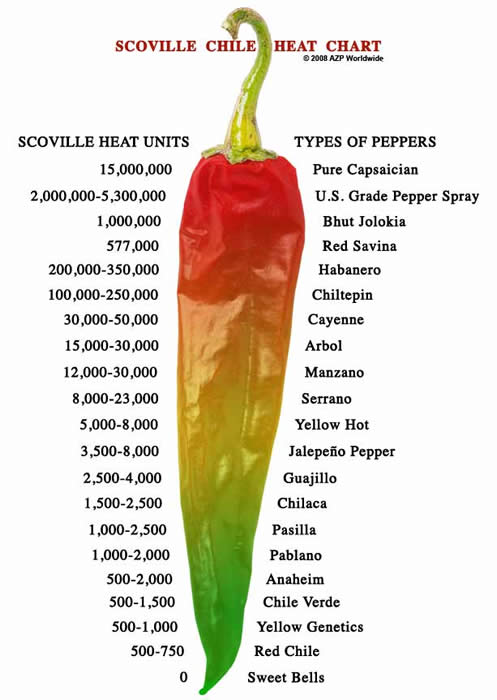
Last week, Buddah stopped by Valley View Farms to talk with Kathy and Carrie about hot peppers. Buddah, along with other chile pepper aficianados, had watched the world's hottest pepper designation change at least 3 times last year, going from India, to the UK and finally to Australia. Peppers are measured in Scoville units. The Australian pepper was measured at 1,300,000 Scoville heat units, making it 300,000 units hotter than the Bhut Jolokia pepper. Take a look at the following chart for an idea of just how hot this pepper is. I can hardly handle Jalapenos!
http://www.eatmorechiles.com/images/chilitemp.jpg
Buddah traced the latest pepper, known as Trinidad Scorpion Butch T's Strain, to a garden center in Cockeysville, MD. You guessed it; the hottest pepper in the world was traced right back to us. It  is our famous Trinidad Scorpion pepper! One of Valley View Farms' founders, Punkey Foard, collected several very hot peppers on his trips to Trinidad and Tobago during his winter vacations over many years. He took  the seed to our greenhouses where we started growing Trinidad Hot Peppers as part of our vegetable transplant offerings a couple of decades ago.Though we've made the claim that Trinidad Scorpion is the hottest pepper in the world, it wasn't until Buddah's interview that we learned it may be recognized by the world's experts for its fiery heat.Click here to watch the interview in its entirety.
Thank you, Buddah. See you in April 2012 when our pepper transplants will be available once again. 

Thursday, August 4, 2011

Cherry Dazzle Crapemyrtle

We've all seen the beautiful red, pink, purple and white blooms of crapemyrtles in many yards and landscapes.

Look closely and you'll notice interesting bark patterns on many of the large trees as well. Crapemyrtles, in both tree and shrub forms, will add color from July through most of September. As an added bonus, once established, they are drought tolerant in our area. 

One of our favorite new varieties is called Cherry Dazzle. A dwarf, compact crapemyrtle, it grows just 3-4 feet high. Cherry red blooms add color to garden borders, containers and mass plantings. I love them in perennial borders where their rich, red blooms combine well with all sorts of plants, including ornamental grasses, echinacea, and liriope. Cherry Dazzle continues to add interest in the garden in autumn with its bright red foliage, contrasting beautifully with the rest of the fall garden and landscape.

You'll find many varieties of crapemyrtles ready to plant into gardens and containers now in our nursery. Our helpful signage will indicate height, width and care for each variety that is available.

Photos courtesy Gardener's Confidence Collection

Saturday, July 16, 2011

Summer-Time for Vegetables

Summer vegetables just can't be beat. And, what is more rewarding than harvesting them from your very own garden? The cool, wet April seemed to be perfect for many of the cool weather crops like peas, broccoli and lettuce.

Then, as summer temperatures soared, it was tough to keep up with the daily harvest of cucumbers and squash. More than one friend on facebook spoke of a record zucchini harvest. Lots of zucchini bread will be baking in kitchens all around Baltimore.


Now, the tomatoes and peppers are ripening, ready to add to salads and the backyard grill. And the eggplant; you've got to have these beautiful purple, lavender and white fruits for a proper ratatouille. Yum!


 That beautiful yellow flower on top of the 4 foot tall plant will soon start producing okra, a necessity for any good gumbo, in just a little while.


Summertime is when our plates finally hold that perfect ratio of fruits and vegetables to meats and starches. It's easy to eat right when the food is fresh and tastes so darn good.
Herbs have been growing very well in the summer heat. Basil flavors vegetable and meats. And could we go without pesto when the basil harvest is so plentiful?


Enjoy the summer garden. Just think, by August 1st, it will be time for that second round of broccoli, cabbage, cauliflower, kale and lettuces. What a great way to spread good nutrition into fall.

Friday, June 10, 2011

Attracting Butterflies and Hummingbirds

Jan and Marian presented a seminar on attracting butterflies and hummingbirds to the garden. Both women are experienced gardeners and, though they have been gardening for years, get excited by every hummingbird and butterfly that visits their respective flowers. Last summer, Marian noticed eggs on the Asclepias tuberosa, aka butterfly weed and Asclepias incarnata aka milkweed. A project was born! The Monarch butterfly eggs were collected and placed in a terrarium with a screened lid. As the eggs developed into chrysalises, the watch began. Marian and Jan took lots of photographs tracking the metamorphosis of the butterflies.


As the time grew near for the butterflies to emerge, coworkers and customers stood nearby to watch the first flights of these winged wonders. Marian and Jan told the story of this summer project with a slide show.

Hummingbirds are regular visitors to many of our staff member's gardens.


We have learned through trial and error which plants attract the Ruby Throated Hummingbirds. Most of us also use hummingbirds feeders to keep these diminutive creatures nearby.


And, our signs at Valley View Farms depict whether a plant is attractive to the hummingbirds and butterflies. We strongly suggest that little if any pesticides be used on or around the garden where hummingbirds and butterflies may be feeding.

The photographs were taken by Jan and Marian. Many were viewed during the seminar. They were fascinating! Thanks for sharing, ladies.