
So we made it through spring and early summer without selling a single impatiens plant. Whew! It was hard to imagine last year that people would plant other shade-loving plants instead of this longtime favorite. But begonias, caladiums, New Guinea impatiens and lots of other plants are now growing in gardeners' yards all over the country. And, according to what we've been hearing, have done so very successfully. Many people have stopped in to say that having to plant something different has been fun and adventurous. They love the new plants and have combined texture, color and foliage like never before.
All of our greenhouse staff thank all of you for trusting us and for giving some of these other plants a try. We'd also love to hear from you about how your season went without impatiens. Or, if you did purchase them from another grower, how are they doing? Feel free to post pictures and add comments to our blog or facebook page.
Saturday, July 6, 2013


Sunday, June 2, 2013
The Heat is ON!
This past week's temperatures had gardeners running for the shade! Many of us who garden in full sun gardens are looking for plants that can handle the heat. We have our favorites and would like to share a list of the toughest annuals for full summer color that handle the heat with ease.
Vinca rosea has been extra popular this year because of its bloom's resemblance to impatiens. Vinca will do well in full sun or a half day of shade. We started carrying a new spreading vinca in addition to the popular upright type. Look for Mediterranean vinca to grow in large drifts on hillsides, an area where a groundcover might be used or in hanging baskets. The Pacifica and other varieties of upright vinca will do well in flower borders, window boxes and container gardens.
Angelonia aka Summer snapdragon became one of my favorite annuals when I saw it on a 103 degree day in a plant trial in West Chicago. Most of the other plants (and people, for that matter) were in wilt, but the Angelonias and Dragon Wing Begonias looked fantastic. I like the Angelface variety for its large bloom and the Serenas for their compact habit and early blooming time. Both bloom in an assortment of colors including white, pink and purple.
The aforementioned Dragon Wing begonias have nice looking pink or red flowers that bloom all summer in full sun, full shade and everything in between. The only down side of these plants is that they are hard to combine with most other plants because of their vigorous habit. We have paired them with Golden lysimachia and Marguerite sweet potato vine with good success. Look for two other begonias with similar growing habits. Both the Whopper and the Big series of begonias are large, vigorous plants that handle the heat beautifully.
Pentas have unique clusters of five-pointed petals on a beautiful, compact plant. Butterflies like them too. Look for white, pink, purple and white. They combine beautifully with many other sun-lovers as well.
Salvia Black and Blue is our top-seller in our 8 inch pots. I think my coworkers and I are responsible for a good many of those sales as we grow them to attract hummingbirds to our gardens. The black stems and cobalt-blue flowers thrive in full sun. Be careful to plant them into a pretty big pot as they will fill out a container in no time.
There are plenty of other annuals that are valuable for their heat-loving capabilities, Purslane portulaca, lantana, celosia, crossandra, and zinnias thrive in hot, hot areas. When transplanting , use a plant starter fertilizer to get them rooted in well. Use Osmocote for pots and beds as a timed-release food that will last 2-4 months. If you want blooms to stay spectacular through the season, use a water soluble fertilizer as well.
Our first heat wave of the summer was relatively short, but, Maryland being Maryland certainly has more hot weather ahead for us. Enjoy your summer!
 |
| Mediterranean Vinca |
Vinca rosea has been extra popular this year because of its bloom's resemblance to impatiens. Vinca will do well in full sun or a half day of shade. We started carrying a new spreading vinca in addition to the popular upright type. Look for Mediterranean vinca to grow in large drifts on hillsides, an area where a groundcover might be used or in hanging baskets. The Pacifica and other varieties of upright vinca will do well in flower borders, window boxes and container gardens.
 |
| Angelonias at the Penn State Plant Trials |
Angelonia aka Summer snapdragon became one of my favorite annuals when I saw it on a 103 degree day in a plant trial in West Chicago. Most of the other plants (and people, for that matter) were in wilt, but the Angelonias and Dragon Wing Begonias looked fantastic. I like the Angelface variety for its large bloom and the Serenas for their compact habit and early blooming time. Both bloom in an assortment of colors including white, pink and purple.
 |
| Dragon Wings do well in larger containers, including hanging baskets |
The aforementioned Dragon Wing begonias have nice looking pink or red flowers that bloom all summer in full sun, full shade and everything in between. The only down side of these plants is that they are hard to combine with most other plants because of their vigorous habit. We have paired them with Golden lysimachia and Marguerite sweet potato vine with good success. Look for two other begonias with similar growing habits. Both the Whopper and the Big series of begonias are large, vigorous plants that handle the heat beautifully.
 |
| Pentas Photo courtesy Benary Seed |
Pentas have unique clusters of five-pointed petals on a beautiful, compact plant. Butterflies like them too. Look for white, pink, purple and white. They combine beautifully with many other sun-lovers as well.
 |
| A hummingbird favorite! |
Salvia Black and Blue is our top-seller in our 8 inch pots. I think my coworkers and I are responsible for a good many of those sales as we grow them to attract hummingbirds to our gardens. The black stems and cobalt-blue flowers thrive in full sun. Be careful to plant them into a pretty big pot as they will fill out a container in no time.
There are plenty of other annuals that are valuable for their heat-loving capabilities, Purslane portulaca, lantana, celosia, crossandra, and zinnias thrive in hot, hot areas. When transplanting , use a plant starter fertilizer to get them rooted in well. Use Osmocote for pots and beds as a timed-release food that will last 2-4 months. If you want blooms to stay spectacular through the season, use a water soluble fertilizer as well.
Our first heat wave of the summer was relatively short, but, Maryland being Maryland certainly has more hot weather ahead for us. Enjoy your summer!
Friday, April 19, 2013
Frequently Asked Questions About Our Garden Center
Valley View Farms FAQs
Does Valley View Farms
provide soil tests?
Yes, we do. Soil testing is a free service available in our
garden shop. Bring in a coffee can
sample of soil taken from the surface down to about 6 “. We will test it while
you wait or shop, to determine the pH of your soil. Optimum pH levels differ
for various plants. Our staff will make recommendations based on the results,
suggesting soil amendments as needed.
What hot peppers do
you carry?
 |
| Soil tests and plant diagnosis in our garden shop |
Valley View Farms carries over 35 peppers, with about 20 hot
peppers in the mix, including some of the hottest peppers in the world. Ancho,
Big Jim, Cayenne, Cherry Red Hot, Cubanelle, Garden Salsa, Hot Portugal,
Hungarian Yellow Wax, Jalapeno, Pepperoncini, Serrano, Super Chili, Tabasco,
and Thai Hot can be found in our pepper aisle from mid-April through May. In addition,
we have Trinidad Hot Peppers including Chocolate Congo, Purple Coffee, Orange
Explosion, Red Trinidad, Yellow Trinidad and Scorpion. We also carry both the
Red and Yellow Ghost Peppers. All of our peppers are grown from seed in our own
greenhouses in Hydes, MD and shipped daily to our store.
 |
| One of our Trinidad pepper plants out in the garden |
What rose varieties do
you carry?
Valley View Farms’ roses arrive in mid-April. We carry over
100 varieties. We won’t attempt to list each and every one. We do carry hybrid
tea, floribunda, multiflora, miniature, climbing and shrub roses. David Austin,
the popular Knockout, Drift, Star and Weeks are some of the brand names
available in our nursery. Our buyer, Alan Thomson, seeks out the best growers
in our region to sell in our nursery.
Do you sell fish and
pond supplies?
Yes. We added our water garden department over 20 years ago.
Stop in to see pond liners, pumps, filtration systems, fish, tadpoles, water
lilies, marginal plants and everything you need to create a pond in your
landscape. Our staff, including manager Tim McQuaid, is very knowledgeable.
They would love to share their expertise with water garden enthusiasts. Check
with them for pond services as well, including cleaning and installation.
.JPG) |
| Koi and other fish are available Spring, Summer and Fall |
 |
| Display pond in our water garden area |
We have a microscope attached to a computer monitor that
allows our customers and our garden shop staff the ability to see problem pests
and diseases up close. Our staff is trained in many Integrated Pest Management
practices and is able to provide accurate information to keep your garden
healthy. Stop by and talk with Brian Brannan, Ryan Gilmore, Scott Anderson, and
other personnel for any questions you may have.
 |
| Ryan using microscope to diagnose plant problem |
What perennials are
best suited for Central Maryland?
Our perennial manager, Andy Shelley, goes to area perennial
growers every week to identify the best plants for our gardens. With over a
thousand choices, our perennial sales people and our signs will help gardeners
decide which plants are best for their particular location. Scores of Hostas, Ferns,
Astilbes, Heucheras, and other plants are available for shady spots.
Echinaceas, Lilies, Peonies, Iris, Ornamental Grasses and other sun-loving
plants are also displayed. In addition, rock garden, groundcover and other
specialty perennials are featured in our perennial department.
 |
| Rudbeckia fulgida |
What plants and
flowers are best for attracting butterflies?
Butterflies are attracted to two types of plants, those that
they use as host plants and others that are attractive because of their nectar.
We have a wonderful handout naming many of the annuals, perennials, trees and
shrubs that fill this gardening niche. In addition, we have put a butterfly
garden in our water garden area. Asclepias, Lantana, Pentas, Echinacea, Parsley,
Agastache, Butterfly Bush and many, many other plants are attractive to
butterflies. In addition to our handout, Valley View Farms has a butterfly icon
on the many annual, perennial, herb and tree and shrub signs that are located
throughout our 10 acre property.
Do you sell native
plants?
Yes. Our native plants are displayed with other ornamental
perennials, trees and shrubs. We use the United States Department of Fish and
Wildlife Habitat and Conservation, Chesapeake Bay Watershed list
as our guide. A copy of the list is located in our perennial sales area. It is
also available to download at www.nps.gov/plants/pubs/chesapeake
Which tomato plant do
I choose?
Good question! With over three dozen varieties to choose
from, making a decision to choose just one is tough. We carry old standards
like Rutgers and Big Boy, our all-round favorite, Celebrity, Cherry, Grape,
Plum, Pineapple and Plum types, and lots of heirloom varieties. Some do
fantastic in pots, others do best in the garden. Let us help you choose the one (bet you can’t
pick just one!), that will have the best taste, performance, disease resistance
or any other characteristic you’re looking for.
I love to entertain.
Do you carry outdoor furniture?
 |
| Our staff learns from the master---Billy Foard in his tomato garden |
Yes. Stop inside our store and see our patio department.
John Hessler purchases deep bench seating, bistro sets, large dining table and
chair sets, garden benches, hammocks, umbrellas, and accessories. Relatively
new is the conversation table with a propane fire pit, great for entertaining
outside in the evening. John has a large number of cushions, colors and styles
available and can also custom order for our customers.
When does your
fabulous Christmas Shop open?
Our Christmas Shop is usually completed by mid-October. We
start putting it up in late August, decorating each of the over 100 trees. Customers are welcome to browse through the
shop as we are setting it up.
 |
| Donna Steele talks about the Christmas Shop with WBAL TV |
Thursday, April 18, 2013
The Baltimore Sun Article on Impatiens
Susan Reimer, Baltimore Sun columnist, wrote a great article on what garden centers and gardeners can expect to find in lieu of impatiens this season. Click on the link to learn more about the Downey Mildew that has affected this most popular shade annual.
http://articles.baltimoresun.com/2013-03-20/features/bs-ae-impatiens-mildew-20130320_1_impatiens-margery-daughtrey-garden-centers
http://articles.baltimoresun.com/2013-03-20/features/bs-ae-impatiens-mildew-20130320_1_impatiens-margery-daughtrey-garden-centers
 |
| New Guinea Impatiens will replace regular impatiens in gardens throughout the mid-Atlantic. Here they are growing in shade at Penn State's Landisville Plant Trials |
Impatiens Update
 |
| Many varieties of begonias will be substituted for impatiens in gardens throughout our region |
The New York Times joined The Baltimore Sun and other major newspapers by running a column
devoted to Impatiens Downey Mildew. In the article, our own Ruth Engel is quoted, talking about our best selling shade plant. The article goes on to offer alternatives for impatiens. Click on the link below to read the article.
http://www.nytimes.com/2013/04/18/garden/a-mold-devastates-impatiens.html?pagewanted=all&_r=1&
As we ready ourselves for our busiest month of plant sales, our staff is putting together displays, handouts and signs to help gardeners make good, sound choices for shady plants. And, I readily admit that is has been fun to look at all the different annuals, perennials, tropicals and houseplants that have stepped up to the limelight. We are going to see some awesome gardens and container plantings this spring!
Monday, March 11, 2013
Made for the Shade---Alternatives for Impatiens
Impatiens has been the go-to plant for many of our shade gardens for years.

So, it is with regret that we announce that Valley View Farms will not grow or sell Impatiens walleriana in 2013. The impatiens in the United States have been affected with a disease called Downey Mildew. While impatiens has been our number one seller in our plant department for years, we are not comfortable selling a plant that had severe problems in our customers' gardens last year. We will be offering alternatives and plenty of advice on what to plant in shade. We urge you to trust us and take some time from planting what we call 'regular' impatiens, until we are once again sure that the plant is free of disease.
We are sure that there are questions. We will answer some that have been asked already this season.
My impatiens did have issues last year. How do I know that it was Downey Mildew?
Here are some before and after photos of impatiens in beds affected by the disease.


It really took off when we had some cool, wet nights in late spring and early summer. Areas impacted the hardest were in deep shade, planted densely in low spots. We visited some of our customers' gardens in midsummer to view their gardens. One of them had been planted with 300 plants, only to have them die in mid-summer.

Impatiens planted in containers seemed to hold out a little longer but most had succombed to the disease eventually.
Is there a way to prevent Downey Mildew from infectng plants? I hate to give up on impatiens.
Not really. There is a spray available to growers that will prevent the disease for a few weeks. The chemical is not available to consumers, so any additional prevention is tough.
I have noticed that many shopping centers, malls and other corporate accounts use impatiens. Will they have to switch to alternative plants as well?
Yes. We've spoken to some of the large landscape companies. They will be planting alternate crops like begonias, caladiums and New Guinea impatiens in 2013.
Okay, so what else will work in my garden?
There are scores of alternative plants. In a way, having this challenge will get many gardeners to experiment with some new things. As one of our friends with Ball Seed, the largest horticultural company in the world, said, "Let's add some drama to the shade garden." The sky's the limit on other plants to consider for shade.
Our greenhouse staff visits regional trial gardens to view and evaluate plants that would do well in gardens in our area. Pictured below are pots of New Guinea Impatiens growing in shade. They were beautiful!

And, here are some other plants that will do well in part-shade to shady areas.
Begonia Baby Wing
Begonia Dragon Wing
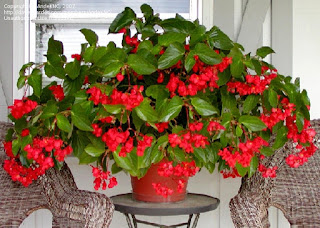
Wax leaf Begonias
Bonfire Begonias

Begonia heimalis ---VVF grows over 10 colors!

Browallia

Caladium---7 varieties grown by VVF, bulbs offered through our garden shop

Coleus Wizard Series

Coleus Sunloving (They like shade too!)

Dichondra Silver Falls

Hypoestes

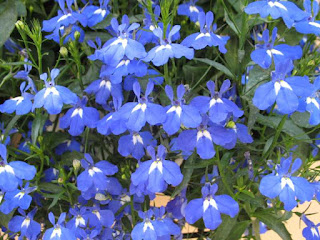
Lobelia
Lysimachia

New Guinea Impatiens

Sunpatiens
Fanfare Impatiens
Perilla

Torenia

Lots of other annuals will do well with 4 or more hours of sun. Allow our staff to show you the many choices available for your gardens and potted plants.
And, our perennial sales area is also a great place to find plenty of foliage and color for shade. Take a look at hostas, ferns,

heucheras, hellebores, dicentra, brunnera, mertensias, astilbes and an entire aisle dedicated to shade perennials.

Tropical plants can add real drama to the garden as well. Look for shade-grown hibiscus, mandevilla, peace lilies, palm trees, ferns, crotons, and a all sorts of other plants to add to containers and garden beds.
We know that impatiens have been our go-to shade plant for years. We also know that, as a company, you've come to trust us. We are united with you to find alternatives to impatiens for shady gardens. We hope to see impatiens back in a few years, but we think that taking some time off from our favorite annual might be the best way to fight Impatiens Downey Mildew.
Maybe, in a few years, our grower, John, will be growing impatiens again for Valley View Farms and our gardening customers.


So, it is with regret that we announce that Valley View Farms will not grow or sell Impatiens walleriana in 2013. The impatiens in the United States have been affected with a disease called Downey Mildew. While impatiens has been our number one seller in our plant department for years, we are not comfortable selling a plant that had severe problems in our customers' gardens last year. We will be offering alternatives and plenty of advice on what to plant in shade. We urge you to trust us and take some time from planting what we call 'regular' impatiens, until we are once again sure that the plant is free of disease.
We are sure that there are questions. We will answer some that have been asked already this season.
My impatiens did have issues last year. How do I know that it was Downey Mildew?
Here are some before and after photos of impatiens in beds affected by the disease.


It really took off when we had some cool, wet nights in late spring and early summer. Areas impacted the hardest were in deep shade, planted densely in low spots. We visited some of our customers' gardens in midsummer to view their gardens. One of them had been planted with 300 plants, only to have them die in mid-summer.

Impatiens planted in containers seemed to hold out a little longer but most had succombed to the disease eventually.
Is there a way to prevent Downey Mildew from infectng plants? I hate to give up on impatiens.
Not really. There is a spray available to growers that will prevent the disease for a few weeks. The chemical is not available to consumers, so any additional prevention is tough.
I have noticed that many shopping centers, malls and other corporate accounts use impatiens. Will they have to switch to alternative plants as well?
Yes. We've spoken to some of the large landscape companies. They will be planting alternate crops like begonias, caladiums and New Guinea impatiens in 2013.
Okay, so what else will work in my garden?
There are scores of alternative plants. In a way, having this challenge will get many gardeners to experiment with some new things. As one of our friends with Ball Seed, the largest horticultural company in the world, said, "Let's add some drama to the shade garden." The sky's the limit on other plants to consider for shade.
Our greenhouse staff visits regional trial gardens to view and evaluate plants that would do well in gardens in our area. Pictured below are pots of New Guinea Impatiens growing in shade. They were beautiful!

And, here are some other plants that will do well in part-shade to shady areas.
Begonia Baby Wing
Begonia Dragon Wing

Wax leaf Begonias
Bonfire Begonias

Begonia heimalis ---VVF grows over 10 colors!

Browallia

Caladium---7 varieties grown by VVF, bulbs offered through our garden shop

Coleus Wizard Series

Coleus Sunloving (They like shade too!)

Dichondra Silver Falls

Hypoestes

Lobelia

Lysimachia

New Guinea Impatiens
Sunpatiens
Fanfare Impatiens
Perilla

Torenia

Lots of other annuals will do well with 4 or more hours of sun. Allow our staff to show you the many choices available for your gardens and potted plants.
And, our perennial sales area is also a great place to find plenty of foliage and color for shade. Take a look at hostas, ferns,

heucheras, hellebores, dicentra, brunnera, mertensias, astilbes and an entire aisle dedicated to shade perennials.
Tropical plants can add real drama to the garden as well. Look for shade-grown hibiscus, mandevilla, peace lilies, palm trees, ferns, crotons, and a all sorts of other plants to add to containers and garden beds.
We know that impatiens have been our go-to shade plant for years. We also know that, as a company, you've come to trust us. We are united with you to find alternatives to impatiens for shady gardens. We hope to see impatiens back in a few years, but we think that taking some time off from our favorite annual might be the best way to fight Impatiens Downey Mildew.
Maybe, in a few years, our grower, John, will be growing impatiens again for Valley View Farms and our gardening customers.

Friday, March 8, 2013
March Gardening To Do List
The unpredictable weather in March reminds us that Spring is coming. Now is the time to get a head start on our spring garden preparations. Here are some projects to begin, in no particular order.
- Bring in your soil for a free pH test. Our garden shop will test your soil free of charge to help determine if the soil needs to be adjusted to allow more nutrients to be available to plants.
- Be careful of not to work in wet soil. Compacted soil does not allow air to reach the root zone of the plants.
- Early spring is a great time to reseed and over seed the lawn. Choose a good mixture including turf-type tall fescues for good results. We carry a full line of Jonathan Green grass seed and lawn fertilizers.
- Control winter weeds like chickweed, nettle and henbit with an herbicide labeled for use in the lawn and garden. Wait until temperatures warm a bit for the best control.
- As air temperatures start to warm up and perennials start to emerge from dormancy, pull back protective mulches, including leaves, to allow plants to grow.
- Plant onion sets, pea seeds, and asparagus and horseradish roots in March.
- March is a good time to plant fruit trees, berries and grapes as soon as the soil is workable.
- Get tools cleaned up and ready for work. Sharpen pruners, loppers and lawn mower blades.
- Invest in a good thermometer and rain gauge. Keep a journal of weather and gardening events.
- Start feeding houseplants lightly. Our greenhouse staff, a bunch of plant geeks, love Monty's Joy Juice.
- Cut back butterfly bushes and ornamental grasses now.
- Pickup one of our Vegetable Gardening Guides. This free handout provides planting dates, fertilization recommendations, and gardening tips for a slew of vegetable transplants.
- Choose flower and vegetable seeds early for the best selection. Take a look at our wide assortment of wildflower seeds as well. Now is also a good time to get transplants started indoors.
- Clean leaves out of the pond and restart the pump.
- Pull marginal plants in the pond back up to their spring shelves along the water gardens edge.
- Clean statuary and fountains.
- Attend some gardening seminars. See our upcoming events for a current list of lawn, vegetable and ornamental gardening classes.
Subscribe to:
Posts (Atom)